

Editor’s note: Apologies for the delay of Lin’s Gilead column, which spent a couple of days lost in cyberspace!
One never knows what to expect from the weather in October. A few nights have dipped into the thirties and one night it was in the twenties. Yet last Sunday midafternoon, our thermometer read 70 degrees.
Condolences go out to the family of Danny Cole, who passed away recently.
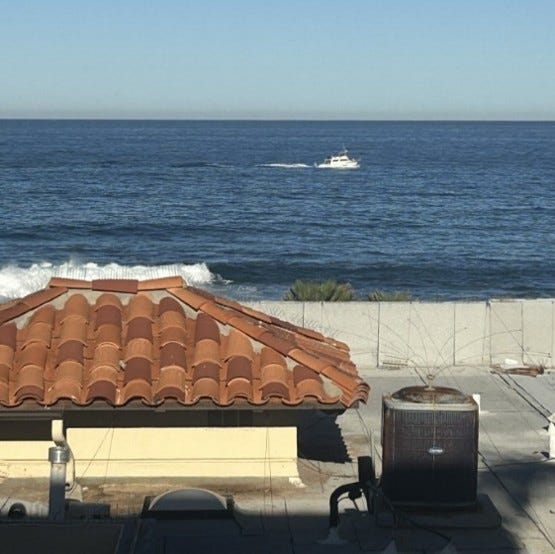
Pete and Claudia Risbara recently returned from LaJolla, CA after visiting with family. They helped to move Claudia’s 99-year-old mother from California to Oregon. The picture is a view from their balcony in CA.
Only one more week to go and Election Day will be over. The political ads will go away. We won’t have to listen to who may or may not have done something. Just tell us what you will do.
Gilead Historical Society
Since the series of Aunt May’s letters has come to an end, I decided to start a series that is from the “Memories of Emeline Heath.” She wrote a lot about her life growing up on the farm in Gilead. She was my mother’s cousin, which in turn also made her my cousin.
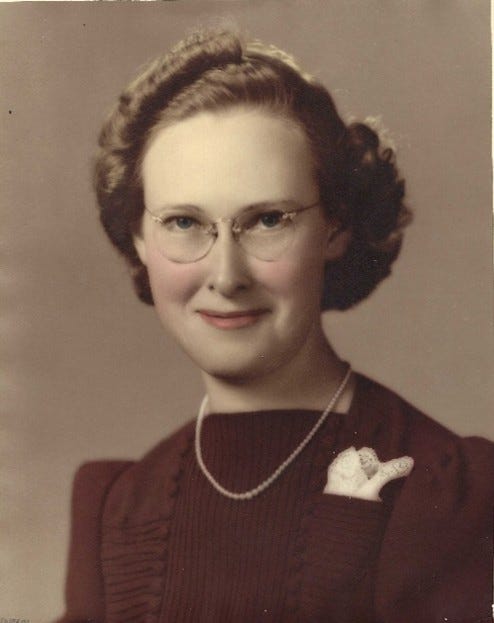
She was born in Gilead on November 5, 1905. She lived on the farm with her parents, Archie and Mabel Heath, and her grandparents, Josiah and Ruth Emeline Heath. She graduated from Gould Academy and then attended Farmington Normal School. She taught school in several towns in Maine including Gilead. She moved to Boston, Mass. to begin working in an office for J. Langdon Sullivan. After several years there, she returned to live in Gilead.
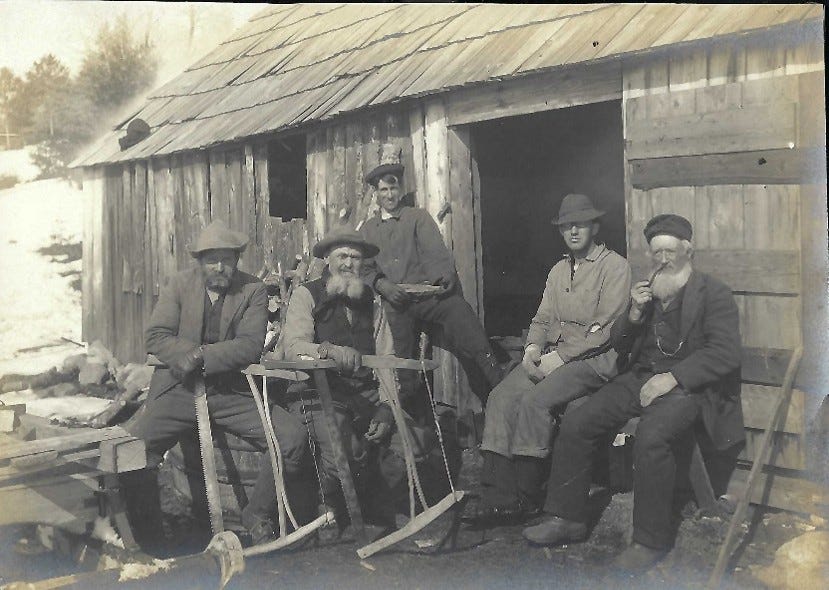
The earliest settlers in Peabody’s Patent (Gilead) probably arrived at about the same time as those in Sudbury Canada (Bethel). As related by Nathaniel Segar in his narrative of the Indian Raid of 1781, there was at least one family here at that time. James Pettingill was killed by the raiders, but we do not know the exact location of his house or the number of survivors.
I remember some graves in a pasture on the North Road near the center of the town. They were marked by rough stones but no one knew the names or how long they had been there. Relocation of the road and the growth of woods have changed the place so that it may now be impossible to find.
By 1800, twelve or more families had established homes. This being “Peabody’s Patent,” some of them were Peabodys. Thomas Peabody’s Inn was built about 1800, I believe. It is still standing on Route 2 and near it, across the railroad track, is the Peabody Cemetery. Among others arriving about that time were two of my great, great grandfathers, Joseph Heath and Cutting Bennett, from the vicinity of Bridgewater and Sanbornton, N.H. Some of their children were born in Gilead and lived here for many years. Joseph’s son, Timothy, married Cutting’s daughter, Dillie, and their son, Josiah Heath, was my grandfather.
Old deeds show that Cutting Bennett bought from Jonathan Peabody in 1817, part of the farm where I grew up. For incorporation as a town, a settlement had to have a certain number of framed (not log) buildings, and the ones on this land were among those existing here when Gilead was incorporated in 1804. My father built a new house in 1902, but the original barn is still standing. Its timbers are hand-hewn and joined with mortise and tenon joints and wooden pins. It must be nearly two hundred years old. My father used to astonish people by telling them that it was “built in Massachusetts.” In was, indeed, “Gilead in the County of Oxford and Commonwealth of Massachusetts” until 1820.
After the death of Cutting Bennett in 1864, my grandparents, Josiah and Ruth Emeline (Stiles) Heath, who lived in the Grover Hill neighborhood of Bethel, negotiated with the other heirs and acquired the farm in Gilead. They moved there in the spring of 1866 with their five children, of whom my father Archie was the youngest.
I try to imagine what Gilead was like in those days, and I will tell as well as I can what was told to me and what I observed in my early life.
~Emeline Heath
Got any news? Email chapmal@hotmail.com